Infrastructure UI
Building infra consoles and defining the design language behind Nutanix products.

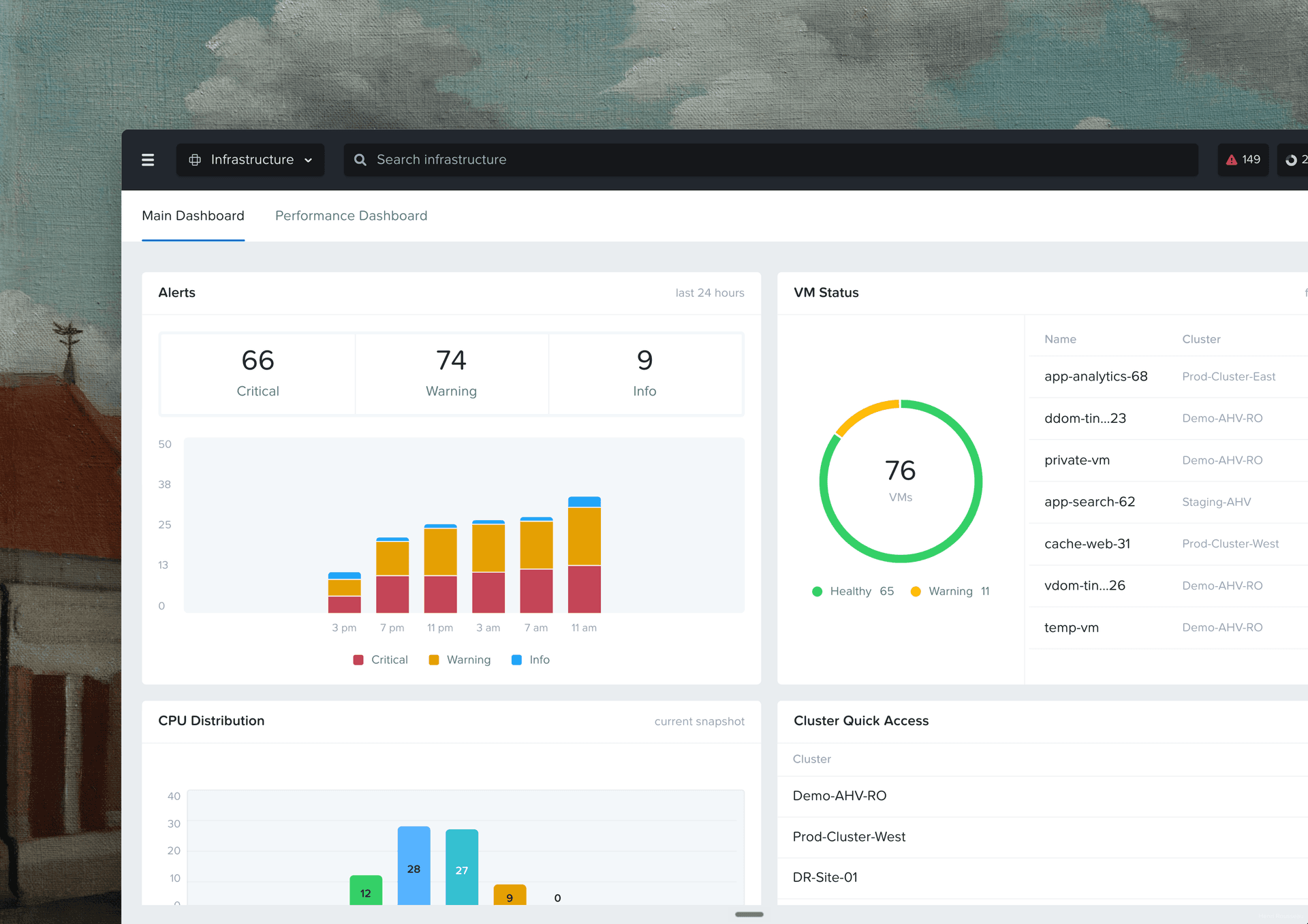
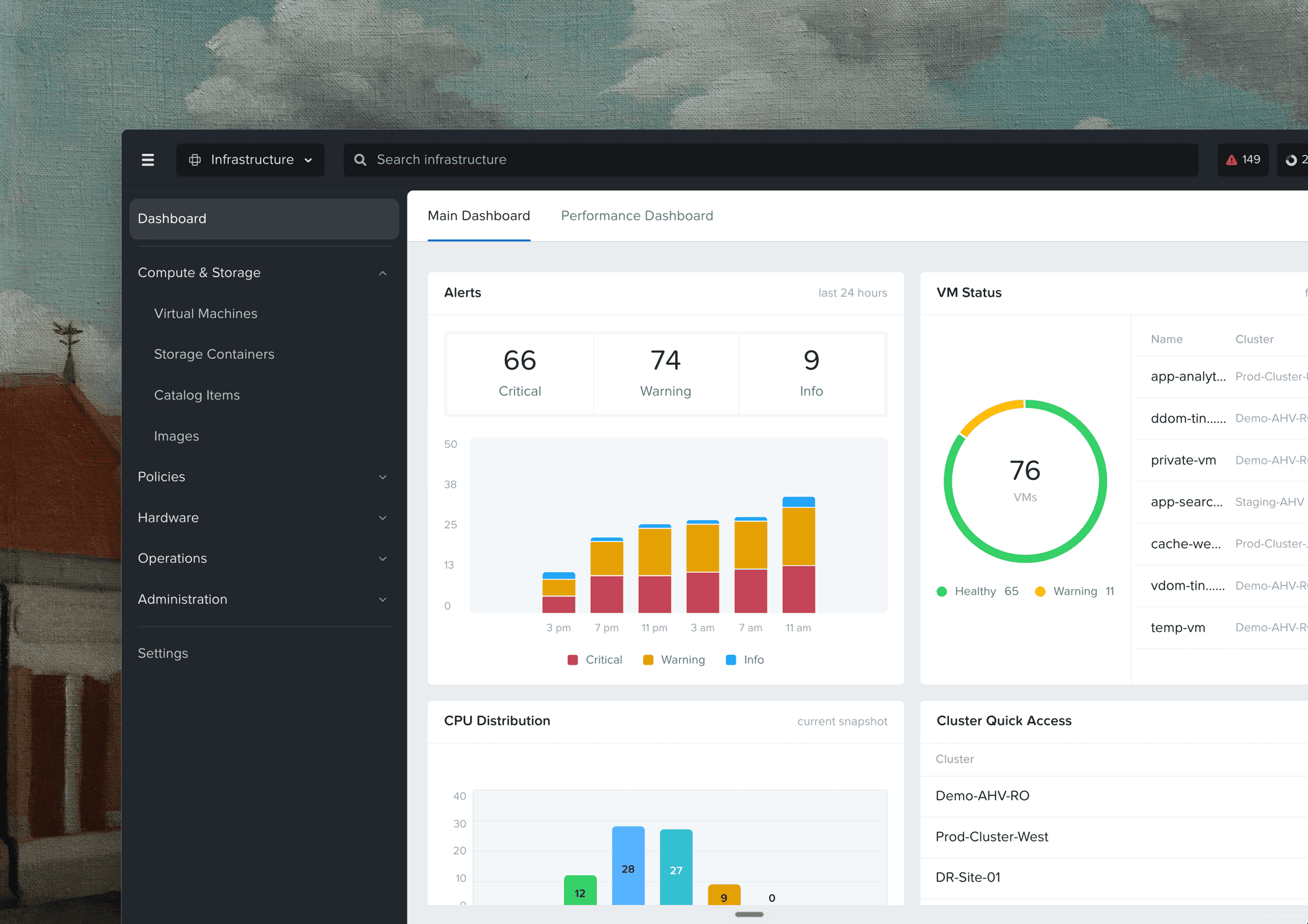
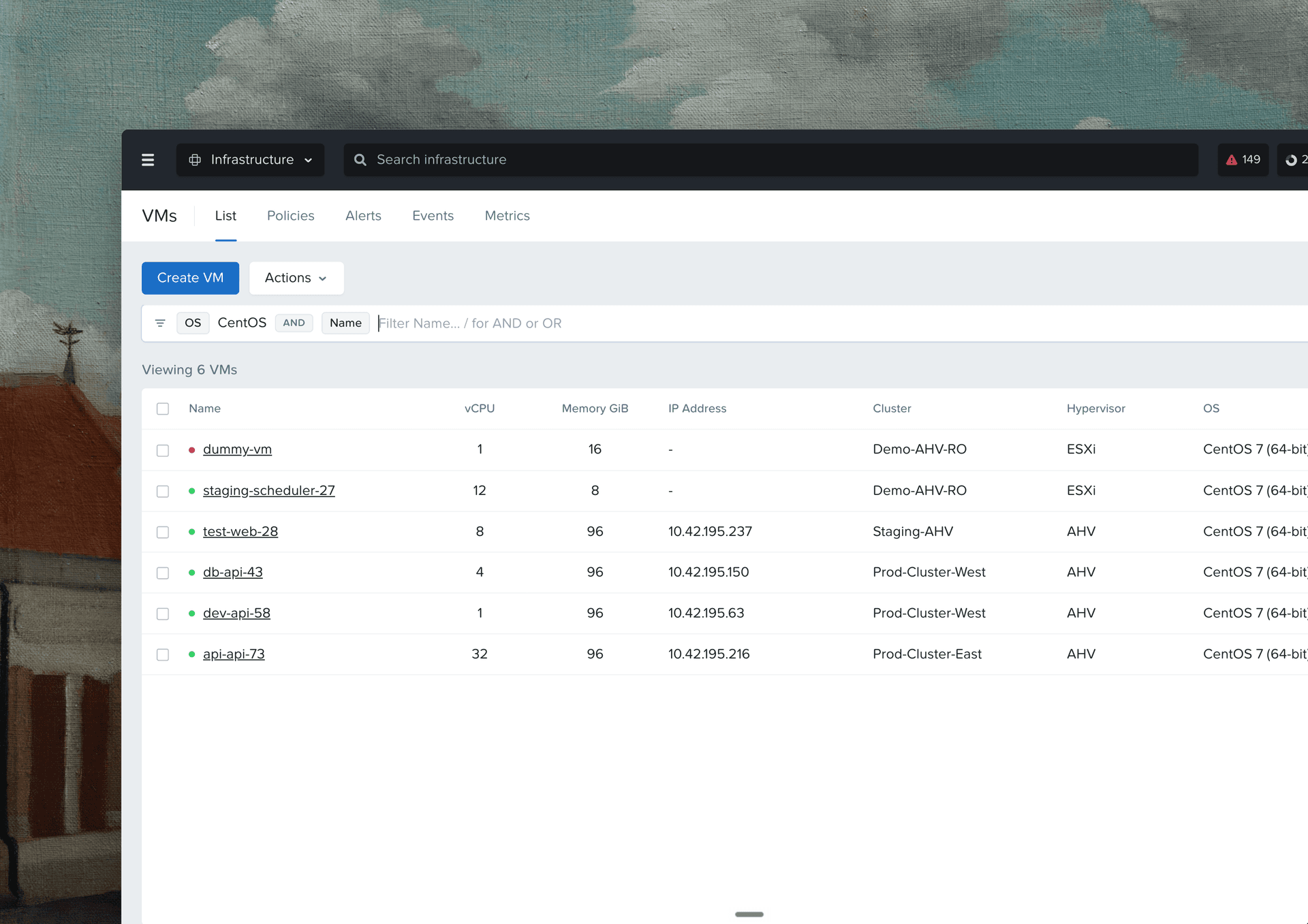
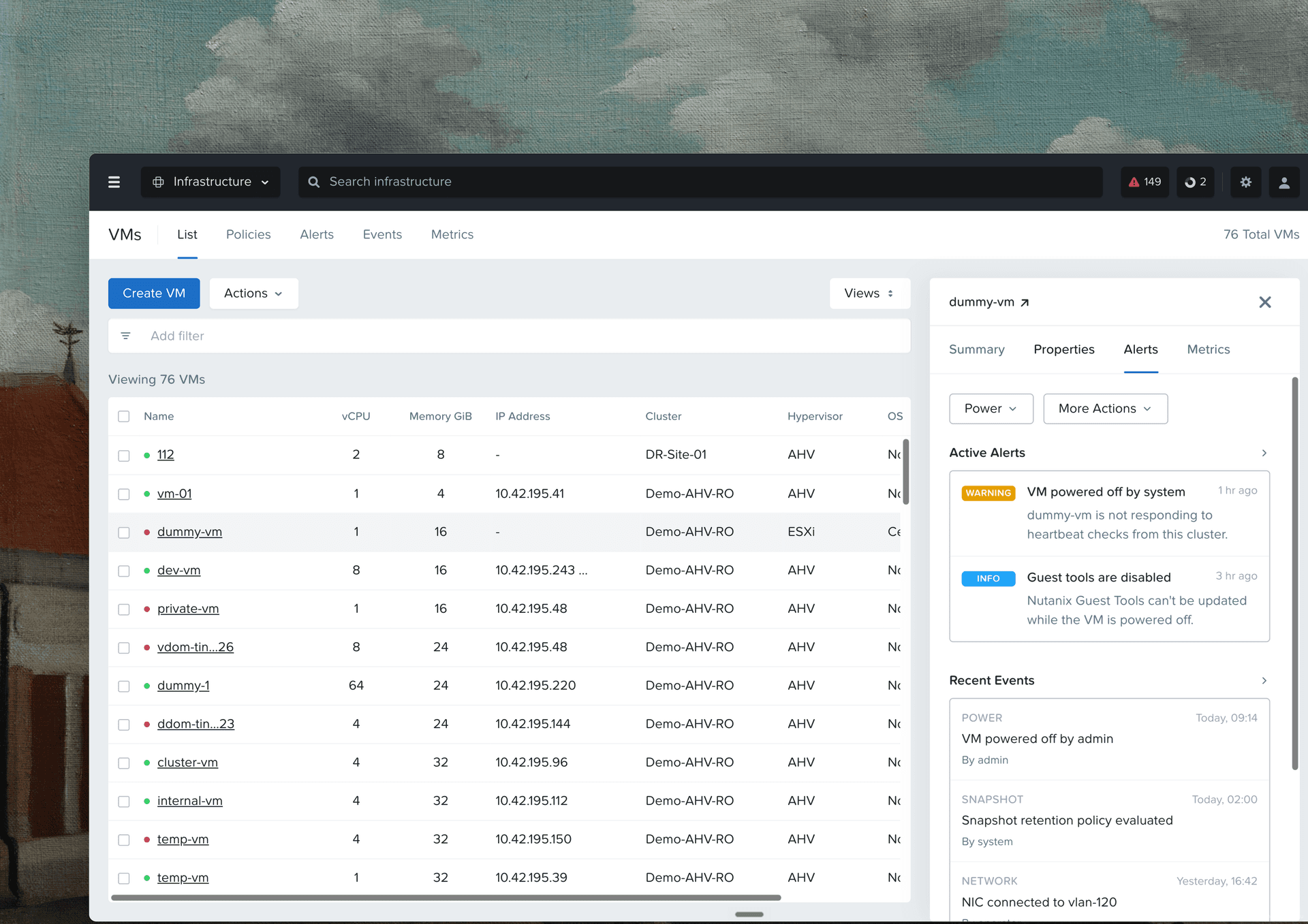
Nutanix is a cloud computing company. I was part of the founding product design team and, during my tenure, led the visual and design system teams
Nutanix is a cloud computing company that pioneered hyperconverged infrastructure, merging CPU, RAM, and storage into a single datacenter building block. I joined the founding product design team and later led the visual design and design systems groups.
In 2014, Nutanix shipped Prism as part of the NOS 3.5 release, replacing a Flash-based console with a browser-native one. My job was to make datacenter complexity read as clearly as consumer software does. That got harder every year after: more clusters, more products, more features, and the same bar for clarity.
The problem
Before Prism, IT admins bounced between hypervisor clients, storage tools, and network panels just to answer one question: is my infrastructure healthy? Simple tasks ate up multiple screens. Remote access usually meant wrestling with a Flash or Java plugin.
Nutanix had converged compute, memory, and storage in the stack, and the interface needed to show that convergence instead of hiding it behind separate tools. It also had to stay legible as the platform grew, from a single cluster to multi-site operations, disaster recovery, lifecycle management, and dozens of new entity types.
My role
I spent the founding years at Nutanix on Prism Element, our cluster console, then on Prism Central once NOS 4.0 shipped: Nutanix's answer to managing infrastructure at scale through one HTML5 interface across datacenters.
My design ownership covered lifecycle management, foundation imaging, storage management, dashboards, navigation, and alert patterns, plus setting the visual direction for the product as a whole. That scope kept expanding until I was leading design system and visual design work company-wide.
By 2026 I'd designed more than 32 features inside Prism, helped formalize the design system and visual teams as their manager, and watched the design org grow from four founding designers to more than 72 across global sites.
The adoption program, React library, and accessibility standards from that era get their own writeup in the Design System & Accessibility case study.
Process & decision rationale
Prism was never a one-time UI refresh. These decisions carried through twelve years of platform growth, from the first HTML5 screens to today.
Health before depth. Admins needed cluster status in seconds, so we led with scan-first dashboards and severity-coded alerts and pushed advanced configuration off the default path. That cost us some discoverability on power features. It bought back confidence during incidents, which mattered more.
One console for the full stack. Instead of mirroring siloed hypervisor tools, we mapped compute, storage, and network to shared objects, so a single navigation model covered the whole hyperconverged stack.
HTML5 and API parity, together. Browser-native delivery wasn't a style choice. Plugins blocked SSO and mobile workflows, full stop.
Navigation built to survive scale. We paired entity-based side navigation with search early, knowing Prism Central would eventually host more features than any menu could hold.
From patterns to enforcement. By 2024, guidelines alone weren't cutting it. I led the shift toward measured adoption: audits, shared tooling, workshops, release-by-release targets, until library usage hit 100% across the design org. That's its own story, told in the Design System & Accessibility case study.
Trend and capacity charts had to read at a glance on busy operations dashboards. Dense enough for production data, not dressed up for a demo.
Outcomes & evidence
Prism Element became the unified home for health, VMs, storage, hardware, and alerts. Prism Central extended that same language to multi-cluster operations, covering health, usage, and upgrades across datacenters from one interface.
Nutanix was among the first enterprise infrastructure vendors to ship a management UI in HTML5, and Prism is still the front door to the platform today.
The work compounded. Design library adoption climbed from 43% to 100% between 2020 and 2023, tracked release by release, backed by Level Access audits and a dedicated design system team.
The founding side-navigation and dashboard patterns are still the backbone of how operators scan infrastructure at scale.
Reflection
Enterprise admins don't want delight. They want confidence.
The hardest calls were subtractive: designing for long VM names and verbose alert text, accepting an information density consumer UX would reject outright, hiding power until context demanded it.
The longer bet was organizational. Components were the easy part. Keeping dozens of designers aligned across twelve years meant proving progress with numbers, testing patterns against real edge cases, and giving teams a system they trusted more than their own one-off solutions. That's what turned a founding console into a habit.
Gallery
Impact
Shipped Nutanix's first HTML5 management console (NOS 3.5) and Prism Central, the multi-cluster platform introduced with NOS 4.0
Shipped Nutanix's first HTML5 management console (NOS 3.5) and Prism Central, the multi-cluster platform introduced with NOS 4.0Designed Prism features including lifecycle management, foundation imaging, and storage management
Designed 32+ Prism features including lifecycle management, foundation imaging, and storage managementScaled design library adoption from 43% as design system lead (2020 to 2023). See the Design System & Accessibility case study for adoption tables, accessibility work, and team structure.
Scaled design library adoption from 43% to 100% as design system lead (2020 to 2023). See the Design System & Accessibility case study for adoption tables, accessibility work, and team structure.Helped grew the design organization from a founding team of four designers across global sites
Helped grew the design organization from a founding team of four to 72+ designers across global sitesAwarded 3 U.S. design patents for infrastructure dashboard interfaces
Awarded 3 U.S. design patents for infrastructure dashboard interfaces
Press
Credits
Product Designer
John Torres
Team
Client
Nutanix